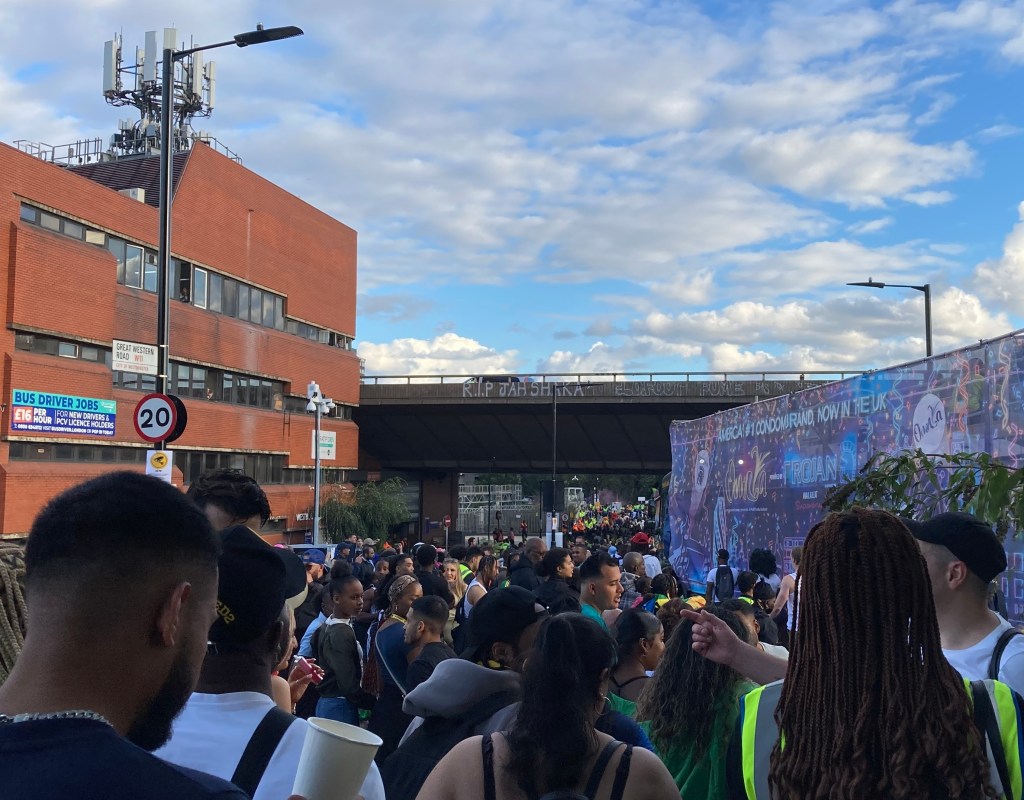
More than a man, Jah Shaka was an institution, an ideal and (perhaps paradoxically for someone publicity shy) an icon of sound system culture. After his death in April 2023, graffiti began cropping up around the capital marking his passing. At the Notting Hill Carnival I clocked a tribute to him on the side of the Westway, precipitously high above the carriageway, the kind of mark that perhaps might stay there for many years.
Such was Shaka’s stature, remembering him would be more than just a matter of personal reflection, but a collective act of grieving, and a rite of passage for the reggae community before the next chapter. So this all day event in London had several functions: a celebration, but also a rolling history lesson, and a living archive of his monumental achievements in Black music culture.
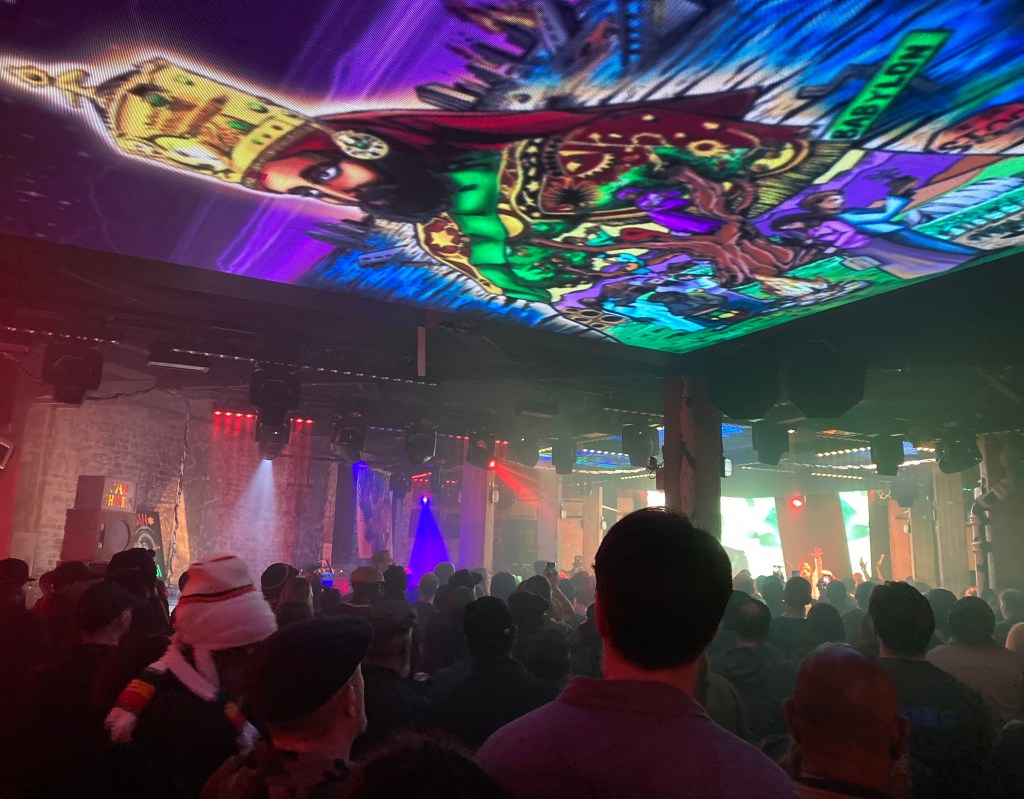
When I walk into the E1 venue in Wapping, it feels like an odd fit for a Shaka event. The main space is separated by large concrete columns, making it hard to congregate around a single focal point. The chic functional brickwork and steel beams contrast with the battered wooden speaker cabinets of Shaka’s (now, his son Young Warrior’s) sound system.
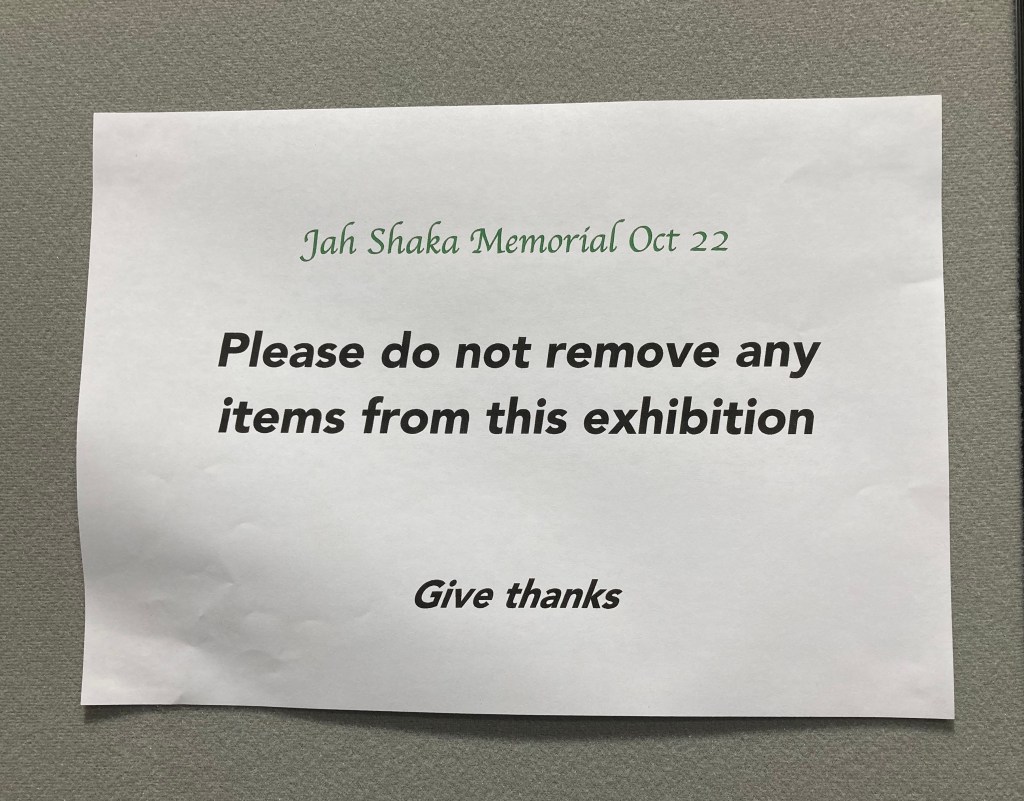
But standing at the back, the monumental pillars have an odd echo of being at church, appropriate given the parallels and (at times) practical overlaps between Jah Shaka’s sound and religious organisations in London. And the venue tonight is festooned with traces of Shaka’s life and work. There’s a substantial archive of flyers of Shaka dances, each of them rich with subcultural detail (“Playing cultural music for cultural people”). It’s noticeable that the flyers often include the year in their dates – for researchers, a common absence in club music culture – as if Shaka always had the idea of legacy at the back of his mind.
The central part of the evening is given over to his collaborators The Twinkle Brothers, who play several anthems from Shaka dances. Between songs, they tell tales of their journeys with the Zulu Warrior, like folk singers tracing the family trees of their songs. Their voices are incredible, and the bass is warm and multi-dimensional. It takes a while for me to clock, from far back from the stage, that it’s an entirely live band, because the bass is so all-encompassing, a huge morphing force-field, rather than something that that’s easily recognisable as the sound of fingers on strings.
Later, Shaka’s own sound system, under the control of Indica Dubs, takes up the slack. The power of the bass is phenomenal, turning every steppers track dropped by the selector into an alert system to get on your toes. The physical sensation is warm and inviting; negative thoughts dissipate as you meditate on the bass weight.
I was curious how this event could even get close to representing the epic history of Shaka’s music in a dance hall setting. Part of this puzzle is a short but thrilling documentary film on a loop in E1’s second room, which details Shaka’s history (and also, like his name, the missing parts of the story). The perpetual energy of the dances and Shaka’s distinctive vocals live on on the screen.
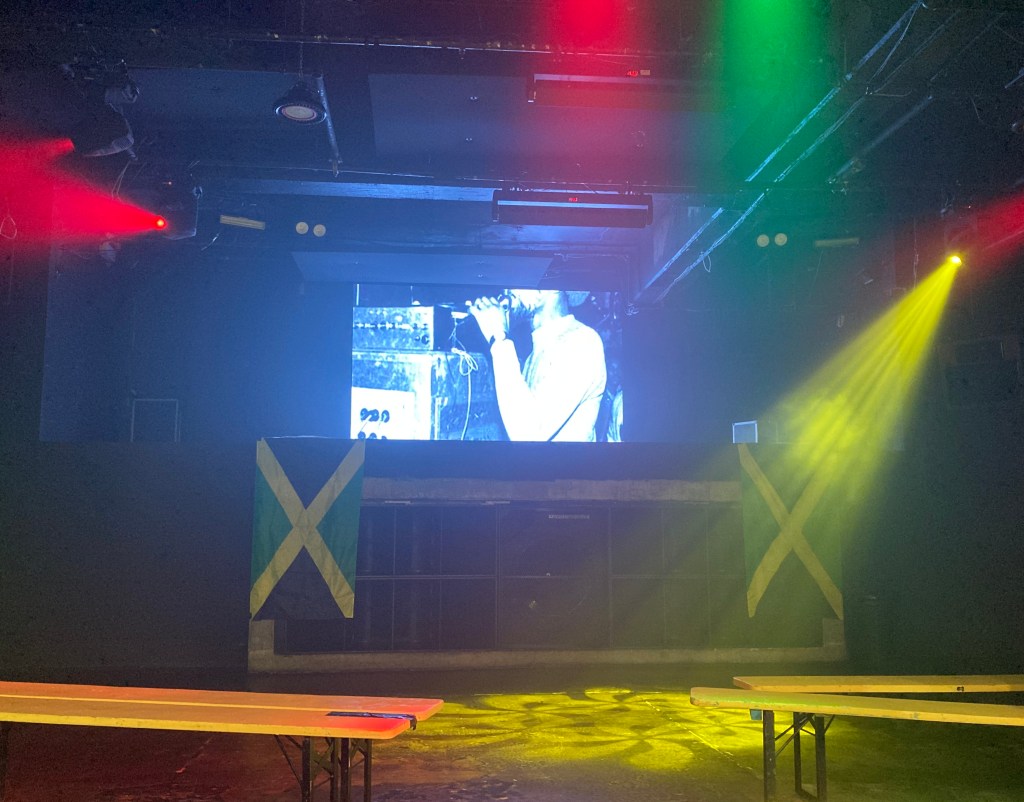
Most moving of all, though, was the deep collection of still photos which run on a loop on a screen behind the main stage in the main room. Alongside pics of Shaka meeting and greeting with reggae heavyweights such as Bunny Lee, there were images of agricultural projects and kids’ football tournaments over in Ghana, where Shaka’s people apparently purchased land and had substantial interests. Looking at the screen and bathing in the righteous music, as one photo morphs into the next, it feels like you are travelling with him through time and space. He is remembered in fine style.
 Slow Motion