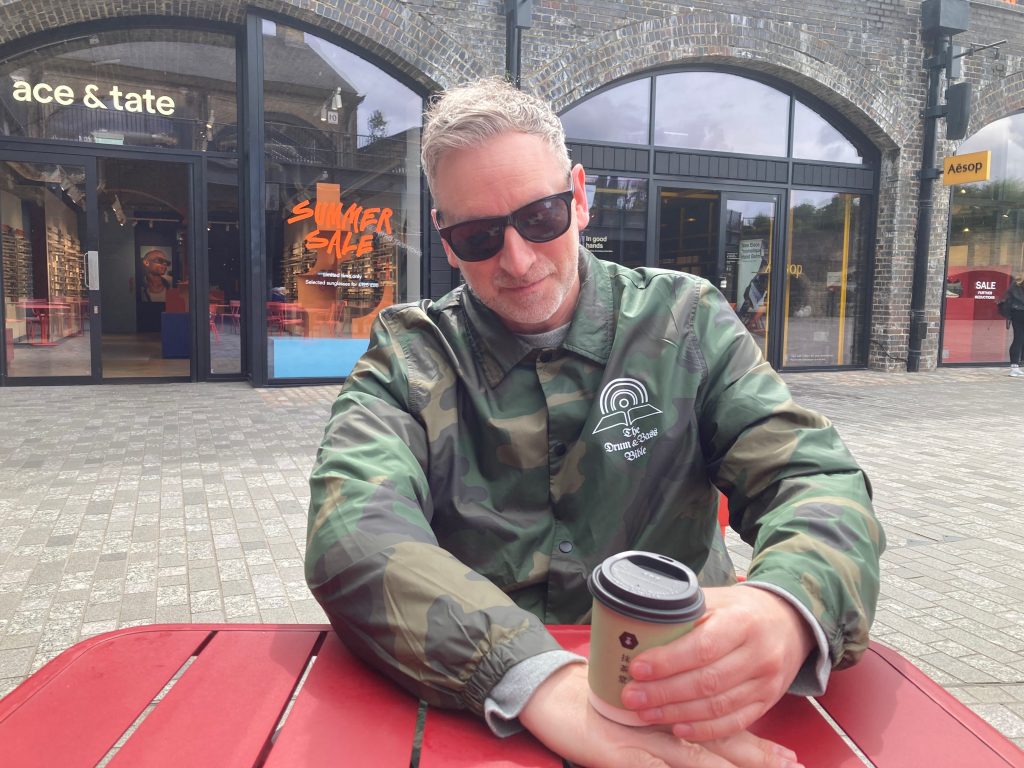
Dan Chapman, aka DJ Crystl, is demonstrating why his drums are harder than the rest using a cup of hot chocolate. “You can overly compress one channel, and slowly feed it in under the other of the same break,” he explains. “You want to slowly feed it in, where all of this top stuff is not being affected.” This is parallel compression, one of many techniques he has to make his drums do the talking. As he chats, he demonstrates with his hand first under and then over his cup. “It’s either on top of it, or it’s underneath it, or it’s there… there’s so many thousands of ways you can edit and process the Amen break as you know, so for that reason alone it can always sound different.”
Under the DJ Crystl name, he produced some of the hardest and most adventurous jungle/drum ’n’ bass 12”s ever made. Tracks such as “Warpdrive” and “Let It Roll” sound as striking today as when they were thrown together with a few keyboards and Akai samplers, and are highly sought after in their original pressings. Like a lot of jungle/drum ’n’ bass – Chapman tends to use the former word – he made extensive use of the monumental GC Coleman drum break from The Winston’s 1969 single “Amen, Brother”. What makes Crystl’s records stand out is the full-frequency attack and mesmerising detail he and his studio buddies created from that break, a bit of multi-tracking, and some reverb and delay. He could make drums sound like whirlwinds, futuristic machinery, or gamelan orchestras. The wildest fantasies of the 20th century pioneers of electronic sound – of how music could be created from noise, and how the use of everyday sounds could take music out of the concert hall and to hitherto unheard places – were realised in jungle and the music of producers such as Crystl.
But he drifted off the radar back in the early 1990s, just when he seemed about to blow up after signing a prestigious deal with London Records. By the late 90s, and drum ’n’ bass’s commercial rise, he had largely left the industry, leaving an enigmatic void. He‘s done vanishingly few interviews since the 1990s, and never made an album, leaving his 12”s for Deejay Recordings, Lucky Spin, Force Ten, Moving Shadow and others as raw examples of jungle at its ruffneck peak.
Around 2022, after a few repressings of his early 12”s emerged on labels such as Hardcore Junglism and Deep Jungle, Crystl suddendly surfaced again on Bandcamp: “Yo what’s up crew. I give you FUTURIZM. My first and very special sample pack project.” The sample packs he cooks up such as Rogue – “pretty much all you need to create a wicked banger really quickly” – show his skill in breaking down breakbeats is still there. There’s also a sense, in their dozens of different iterations and deconstructions of the Amen break, that he’s come to terms with his role as a jungle pioneer and the value of his early work.
His new project is his most ambitious for some years, the heavyweight collection The Remixes Album, which is being pre-released on a USB stick. The stellar list of collaborators includes Dom & Roland, Tech Itch, Fierce, Benny L and Voyager.
2024 also saw a quiet revival of interest in Crystl due to the work of Xylitoil aka Catherine Backhouse. Her wildly imaginative Planet Mu album Anemones extrapolated from the work of the old school breakbeat scientists and extended it into new realms. “I wind back to when I was 16 and first heard the track “Meditation” by DJ Crystl,” she said in an interview with Ben Cardew for the Line Noise podcast.
“That did something absolutely magical to my mind when I first heard that tune,” said Backhouse. “That’s what I was trying to cling on to, that simultaneous really hyper-intense, strapped-into-a-kind-of-wind-turbine fanaticism, but this absolute blissful, ancient kind of stillness.”
When we meet in London, Chapman is energised and full of schemes. “I was originally coming back on the scene to produce new music, and I still am. What got me into the whole sample pack idea was actually Dom & Roland,” aka friend and drum ’n’ bass veteran Dominic Angas. Chapman these days makes music alongside working as a personal trainer, a line he fell into in the 1990s, when he gained himself a rep in fashion and media circles, and he still maintains a healthy list of fitness clients today. He got rid of a lot of his original music equipment back in the day, some of which he’d acquired around the time of his record deal, but now has a compact computer set-up loaded with the kind of vintage sounds and treatments that made his rep.
“The style is very early noughties Blue Note,” he says of his current vibe. “That’s where my head stayed with drums.” Drums were always his trademark, but a degree of mystery around how he creates such a wide spectrum of sound from working with a single drum break. “I do it in a careful way, where I’m utilising the transients from the Amen break to help me create fills within the drums, and layers and tops,” he explains. “But then I will do ones that are like an obvious Amen break, with layers, because a lot of producers like to have variants of a heavily processed Amen break with that hard trashed-out dancefloor vibe.” On his sample packs, drum breaks are broken down into minute subgenres of Amen breaks, with dozens of different variations and treatments of that original percussion recording. “Organised chaos, in my head,” he sighs. “I’ve got one of those very noisy brains. I find it very hard to organise myself, actually.”
The Amen break’s role as one of the building blocks of jungle has directed attention in recent years to the fate of those who created the original track. Coleman, The Winston’s drummer, died in 2006 and never benefited much from the musical genre that his playing helped give birth to. The way an artist like Crystl manipulates and repurposes drum breaks takes it beyond just borrowing, though, and is more like a form of composition in and of itself. “It’s all sliced up completely, and then pitch-changed, and then different snares are added, and then there’s transient manipulation, and then there’s different plug ins which go on it, and then there’s parallel compression. It’s almost like making a fucking track, on one drum.”
Like many of the great jungle producers, Chapman grew up on the suburban fringes of London – in this case Edgware in North West London – where he was connected to the capital’s music via radio and raving, but could do his own thing amongst his peer group. “Hiphop was basically me and a crowd of mates,” he says of his early days folling around with music. “We formed something called The Brotherhood. This was early on. Then fast forwarding incredibly far, it was formed with different people, apart from the frontman, Shylock, which is my friend Laurence [Knopf]. So it started as a collective, as a crew, and it had many people in it. Then it turned into more of a group. I was basically doing some scratching, DJing.”
“I started to get wind of the whole rave scene,” he continues. “I was a bit uncertain. But then I stated to realise there was a different side to it, very early breakbeats, with some ragga stuff, Big Daddy Kane and Public Enemy. I realised this is not acid house, this is different. It was that early rave music, a lot of black culture, ragga culture coming in… I always liked the faster hiphop. I was a very hyper as a child, still a bit like that. So I always liked fast. So it was a natural progression.”
In the early days of rave, DJs who knew what they were doing and could source decent records found themselves in demand – although before the personality cult and the star-system of the DJ, fees were often barely more than pocket money for a few beers. “I vaguely knew someone at Fantasy FM’s Crazy Club at [London’s] Astoria,” a session where DJ Rap and DJ Hype also cut their teeth. “I handed a tape in… whoever the owner was, they really liked it. 1991 maybe? And then I started doing it regularly there.”
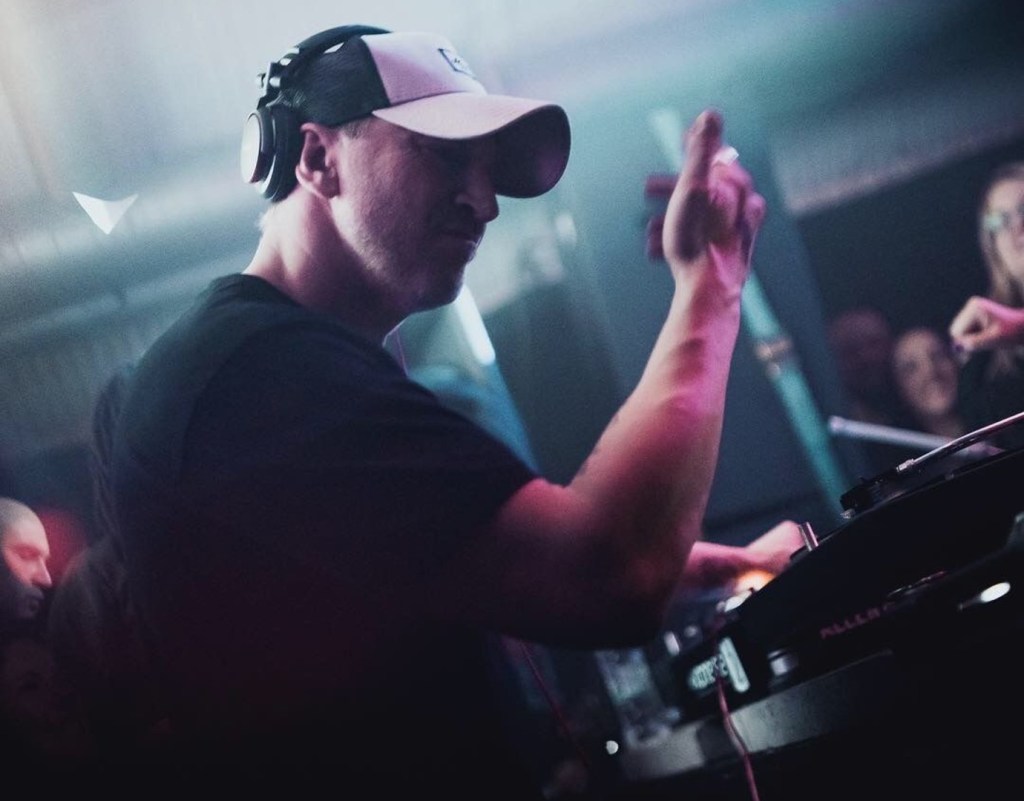
Despite his artist name, Chapman doesn’t relish DJing, and his spells behind the decks in recent years are rare. By around 1993, he fell into making tracks for North London dance label Lucky Spin. “They were a couple of Hertfordshire brothers. And I was doing the artworks and stuff. I did the first tracks for them and carried on.”
One of the signature DJ Crystl tracks, included on Suburban Base’s agenda-setting compilation Drum & Bass Selection 1, was the futuristic “Warpdrive”, released on Lucky Spin associate Deejay Recordings.“Basically, I had a night out, at Orange,” Chapman recalls. “They did stuff at Camden Palace. And this track came on, Doc Scott’s “Here Comes The Drumz”. I fucking freaked out, as a lot of people must have the first time they heard it. The drum patterns, the Public Enemy sample, and then there’s the “Mentasm” [sample] coming in… I’m literally getting goosebumps thinking about it.”
It was the hiphop connection of Scott’s track, released under the name Nasty Habits, that got under Chapman’s skin. “I’m like, this is so fucking me, this is in my blood that I haven’t produced yet, and this guy Doc Scott has produced this incredible track, one of the only tracks of the time that had that effect on me. Needless to say, typical producer, you go into the studio the next day…. “Warpdrive” was born, because of the inspiration and excitement that that caused me.” Crystl’s track features a similar hi-hat intro, spinback sounds and high torque Amen breaks as the Doc Scott original, but like many tracks made by producers attempting to match the vibe of something else, it takes it somewhere completely new. To date, he’s never got the chance to meet Doc Scott and thank him.
Many of the key DJ Crystl tracks were made alongside associate Voyager aka Pete Parsons, who Chapman is keen to give credit to at every possible opportunity. The pair formed a close bond putting tracks together at Monroe Studio on North London’s Holloway Road, where The Brotherhood has made some tracks back in the day. This is where they experimented with breakbeats, sampling, chopping, looping and reversing them to create new rhythms. “There would be many tracks where it would be as a loop, where there would two or three splices, from the kick, and from another place, so maybe split into two or three… a couple of different versions at different pitches, where we’d pitched down on the Akai.
“And then other times, it would be displayed over the keyboard in every little segment,” Chapman continues, imitating with his mouth the sound of triggering random drums on the keyboard. ”And then you would have complete freedom doing what the hell you want… I would play physically, manually, all of my drums, all of the edit, record it in, then quantise if it needed it. It’s all hand played. I didn’t ever draw anything.”
That left space for almost limitless fooling around. “I make the drums animated. I give them patterns,” he enthuses. “I used to go off on tangents. All these ridiculous edits and stuff. And actually Pete would really get involved in that, he loved it. I would have gone for a coffee or buy lunch, and he’s done these little edits!”
In time, Crystl’s striking productions caught the ear of A&R people seeking to sign the next big thing in the burgeoning jungle scene. “I got approached by London Records… they wanted to compile the Counterforce album, which was a compilation of beats and several of mine were on there.”
With a sizeable advance and a new set of equipment, Crystl had options about where he wanted to go next. In retrospect, maybe had too many options. With expectation intense, he tried to come up with a fresh concept. So he decided to return to his hiphop roots and cross-splice it with the percussive experimentation of drum ’n’ bass. “I was quite interested in being incredibly different, for it not to sound like traditional at the time drum ’n’ bass… I was one of the first people to employ a rapper [NYC MC Headrush], and create something that was drum and bass speed, but produce it like it was hiphop. I did a remix for DJ Krush, “Miso”. So I remixed that track. I also remixed Dr Octagon, “Blue Flowers”.
Along the way, his productions lost a little of their connection to the dancefloor. “That was me experimenting,” he reflects now. “I don’t believe any DJs in the jungle scene would have played those records, because I just got so deeply experimental.
“I’m very proud of what I ended up releasing with the major… I listen to it now, I don’t like it,” he admits a touch wistfully. “But it was correct at the time, and I did what I did, and it ended me up wherever I am now.”
His major label career stuttered and eventually came to a halt. The passage of time and his career in other fields have given him an even-handed perspective on his short rollercoaster ride. “I had to produce an album, and I think I felt incredible pressure,” he reflects. “It’s a very normal thing. And that’s what made me focus on releasing singles for them. Because I couldn’t quite come up with a concept that I felt happy with, and I felt confident with.
“I had a good discussion with my manager and that’s when I pretty much laid it all out, and said, ‘look, I’m feeling pretty apprehensive about trying to get a concept together. I’m struggling… And I couldn’t work in that stressed atmosphere in my mind. And they were like, cool, we’ll put it to the label. I’m sure there must have been some disappointment there… it came to an amicable fizzle out, and we just left it there.”
Crystl’s genius is mostly contained within a few slabs of 12″ vinyl which, while they’ve been periodically reissued by companies such as Deep Jungle and Hardcore Junglism, are a little off the radar in the era of digital streaming. They’re five minute masterpieces of perpetual motion where not a moment or sound is wasted. If it proved hard to contain this energy in an album, maybe it was just because it was uncontainable. And there are few producers who get to perfect their art to quite the degree of Crystl. “There’s so many thousands of ways you can edit and process the Amen break,” he says. “So for that reason alone it can always sound different.”
A collection of Crystl’s greatest hits is long overdue. In the meantime, The Remixes Album is a crucial collection of heavyweight tracks informed by the old school of 90s darkside drum ’n’ bass. It’s breakbeat science and cut-up a long way from the software plug-ins and boom-bap beats that dominate drum ’n’ bass in the arena era. Dom & Roland creates the kind of levitating rhythmic tornado familiar from his “The Storm” for “The Dark Crystl”. Benny L extends the cubist percussive hall of mirrors on “Warpdrive”. And old associate Voyager provides a rolling version of one of Crystl’s most blissful tracks, “Paradise”.
Jake Barnes did a cool interview for The Wire back in 1996, which fills in some of the backstory, and I highly recommend. You can find it via their Exact Editions platform. You can also find an old school article for Generator magazine here.
A great way to keep up with all of Crystl’s activities is via his Instagram. You can find all of his current music over at his Bandcamp, where you can pre-order the USB edition of his brand new and fearsome release, The Remixes Album.
 Slow Motion