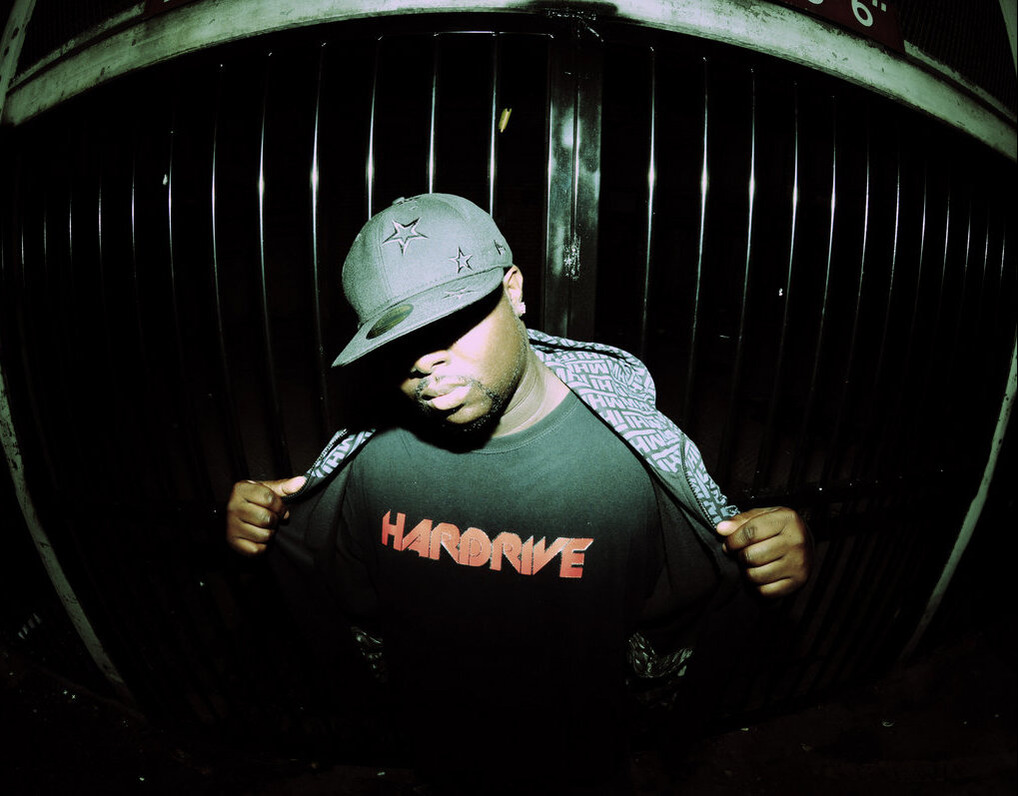
On the Discogs entry for the After Shock label, it still lists a couple of phone numbers you might use to contact the label. Putting your mobile on the label of a 12″ was common in the old days of grime, when few artists had managers, distribution was barely on the agenda, and creating your own website involved finding a friendly tech nerd. But those numbers seem extra poignant with the news of the death of Terror Danjah, one of grime’s greatest ever producers and After Shock’s mastermind . Maybe there’s an old Nokia phone in a drawer somewhere in East London which would vibrate if you punch in the digits.
Terror Danjah’s enormous role in creating grime might not be immediately obvious from just scrolling through his discography online. Grime in the early 2000s was too mercurial for the record industry to effectively engage with – the long lead-in times of major releases made little sense in a scene where beats were laid down quickly on home computers and gathered momentum as MCs jumped on them. But among the dozens of 12”s that were landing in London record stores, the early After Shock releases such as the Industry Standard EP stood out because it was clear a distinctive sound signature and aesthetic was taking shape, like in the contemporaneous productions of Jammer and Wiley.
To get a sense of the catalytic power of Terror Danjah’s beats, you just need to listen to the first few minutes of the landmark Sidewinder Bonus CD compilation by groundbreaking DJ Logan Sama. It kicks off with many of the hottest MCs of the day such as Wiley and Breeze rhyming on Terror Danjah’s “Creepy Crawler” beat, with the kind of urgency that only comes around once in a generation. Terror Danjah was a master at juxtaposing just a few striking sounds to devastating effect. On “Creepy Crawler”, it was some low horns like a Blaxploitation soundtrack, and G-funk synth squiggles like prime Dr Dre. The way they worked together was like the last 30 years of Black music fusing together into an advanced new prototype. Terror Danjah was also a virtuoso in using just a little reverb and delay, filing out the spaces of skeletal instrumentals to create drama mystery, lushness, hidden spaces… all of the above.
One part of the history that’s faded away in recent years is the role of BBC’s 1Xtra station in presenting grime more or less straight from the streets in its early days. Aftershock had a fantastic show on the station for a couple of years, which often featured Scratcher (aka Scratcha DVA) and Terror Danjah (sometimes namechecked Terry Danger) mixing and rhyming it up in fine style for a couple of hours or more. These shows are now hard to find, but this half hour set from 2006 gives a flavour. At this time, grime crews acted as artists, DJs, curators, management and marketing units all in one, so when Terror Danjah explored an exciting meeting of grime and R&B which they coined R&G, they often spent a half hour of their slot plugging productions of their own proto-genre. Bum rushing the show in this way was often necessary at a time when the record industry had yet to figure out what was going on.
Like a lot of the musicians of early grime, his legacy can be a little hard to map two decades later. A google for “Creepy Crawler” throws up many alternative mixes and versions. So history will thank the Planet Mu label, who around the turn of the decade released Gremlinz, an extensive collection of Terror’s beats named in tribute to the distinctive vocal cackles that were threaded throughout his music like a watermark – it’s still available at time of writing. Perhaps someone of Terror’s talents might have gone on to produce more albums over the years, but through the 2010s he stuck mostly with EPs and single releases, often dropped in quick succession on his Bandcamp. A great overview of After Shock’s role in early grime is provided in this great Simon Reynolds piece on The Wire’s website, published to celebrated the magazine’s 300th issue.
You can juxtapose just a couple of Terror’s productions to get a sense for his sensational talent. Trim’s vocal “Boogeyman” – another track which it is a little hard to find in its original form on the main streaming services – is a sea-sick lurch of dissonant strings that’s like a migraine headache in beat form. In contrast, R&G mainstay “So Sure”, by Sadie Ama featuring a great verse from Kano, is a gentle pitter-patter of flutes and clicks like a lover’s breath of on your neck, and which barely misses the absent bassline.
Aftershock were a crew as well as a label, featuring MCs such as Bruza and DE Velopment, and both of them laid down some great rhymes, notably Bruza’s tremendous “Get Me”. You can dig deeper into these and other landmark moments of early grime through some of the great archive accounts now active like Solomans Archive and Da Metal Messiah. But the main glue that held the crew and the label together was really Terror’s auteurist production skills.
Terror Danjah’s place in grime might be seen alongside Gussie Clarke’s in reggae. Clarke did not produce too many albums of his own, but the beats he laid down for Gregory Isaacs, Shabba Ranks and others completely redefined how reggae was made and what dancehall and ragga would come to be. In a few months, everyone else needed to get with the programme or be stuck in the past. Terror Danjah posed the same question in the early 2000s.
 Slow Motion